
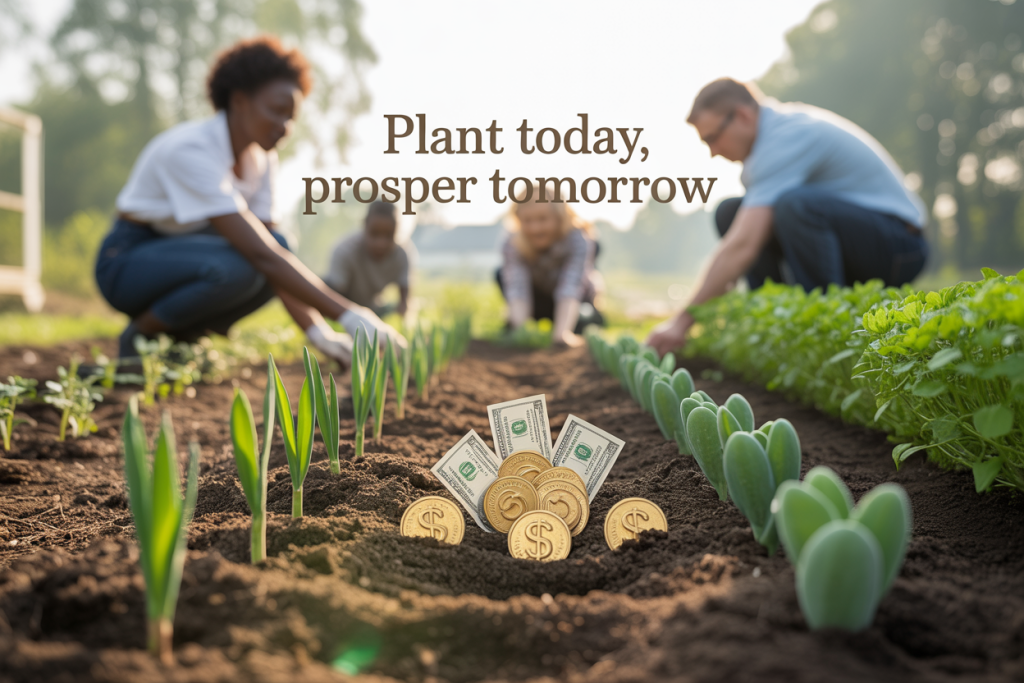
Ever looked at a seed and felt goosebumps? Seriously. That tiny speck holds the power to feed families, build wealth, and change lives. For thousands of farmers across Africa, that’s not poetry—it’s reality.
I’ve walked those fields. I’ve seen women turn a handful of maize seeds into school fees for their children and men transform small plots into community prosperity through regenerative farming.
You’re about to discover exactly how ancient farming wisdom combined with modern techniques creates this miracle cycle of planting and prosperity. Not just for harvests, but for generations.
But here’s what most agricultural experts won’t tell you: the secret isn’t in the soil or even the seed itself. It’s something far more powerful that happens when a farmer plants that first crop…
Understanding the Spiritual Connection to Planting
Ancient Traditions of Sacred Agriculture
Farming wasn’t just about food for our ancestors. It was sacred business.
The Mayans didn’t just plant corn – they prayed to corn deities and timed their plantings with celestial events. They knew something we’ve mostly forgotten: soil isn’t just dirt, it’s divine.
Indigenous cultures worldwide shared this reverence. Native Americans performed ceremonies before planting, asking permission from the earth. Egyptian farmers worshipped Osiris, believing their crops embodied his resurrection story.
These weren’t superstitions. They were relationships. Deep, respectful connections between humans and the land that fed them.
How Planting Mirrors Life’s Journey
Ever noticed how a garden reflects your own life? You plant seeds (dreams), nurture them (work), face pests and storms (challenges), and eventually – hopefully – harvest something beautiful.
It’s no accident that spiritual teachers use planting metaphors. “You reap what you sow” isn’t just farm advice.
When you plant a seed, you practice faith. That tiny speck disappearing into soil requires trust in unseen processes. Sound familiar? It’s exactly what we do when starting new chapters in our lives.
Cultivating Mindfulness Through Garden Work
Getting your hands dirty in a garden might be the most accessible meditation practice around.
Feel that? The cool soil between your fingers. The weight of a watering can. The subtle resistance as you pull a weed. Gardening demands presence.
Your racing thoughts calm down when you’re transplanting seedlings. They have to – these fragile beings need your full attention.
Modern life bombards us with notifications and noise. But plant care operates on a different timeline. It can’t be rushed. When was the last time you gave anything such patient attention?
The Prosperity Cycle in Nature
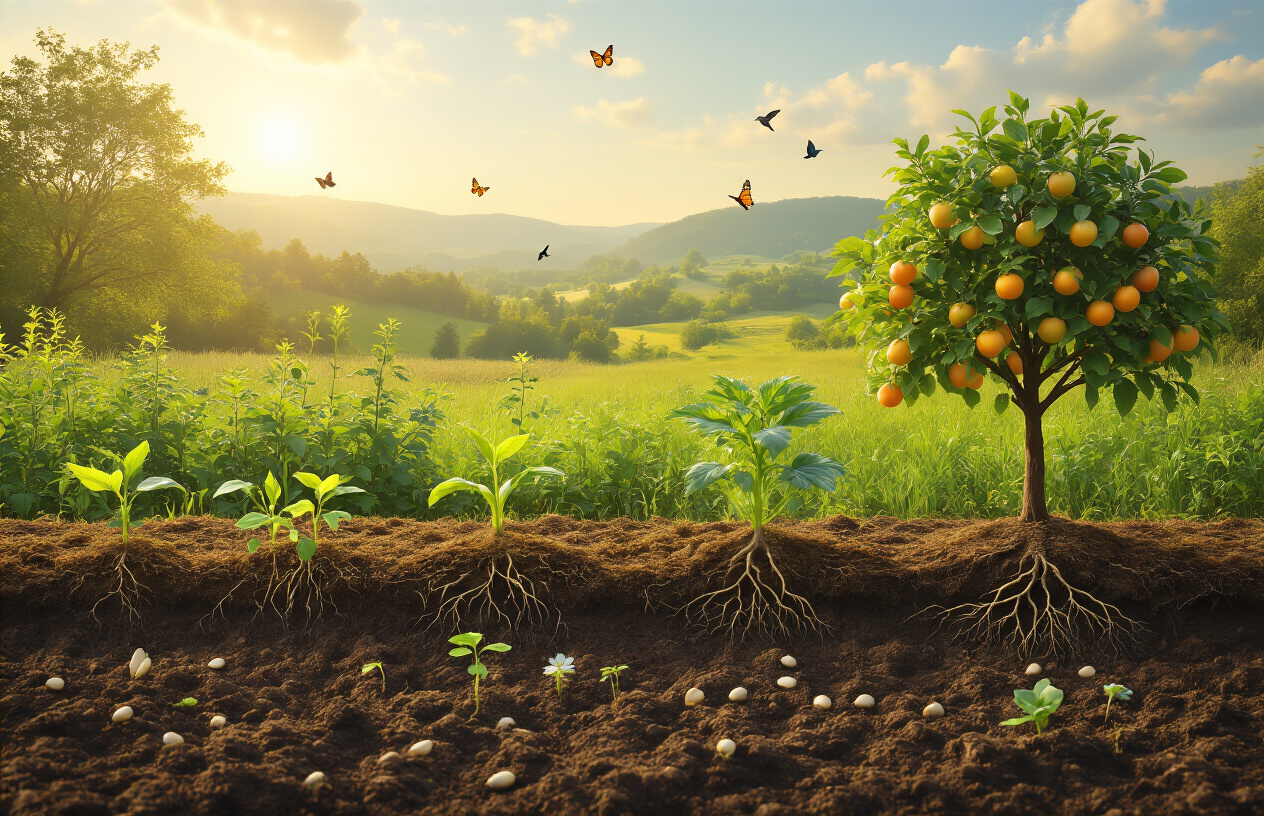
A. Seeds of Intention: Beginning with Purpose
Ever noticed how gardeners don’t just toss seeds randomly and hope for the best? That’s not how abundance works either.
Your prosperity garden starts with clear intentions. Think of intentions as those tiny seeds packed with massive potential. But here’s the thing – vague wishes like “I want more money” are about as effective as planting mystery seeds from an unmarked packet.
Get specific. What exactly are you cultivating? Financial freedom to travel? A thriving business? A debt-free life? The universe responds to clarity, not confusion.
Write it down. Seriously. The physical act of writing your intentions signals to both your brain and the universe that you’re serious. It’s like pressing that seed firmly into fertile soil.
B. Nurturing Growth: Daily Practices for Abundance
Your prosperity seeds need daily attention. Skip this, and watch your abundance garden wither.
Start with gratitude. Count what you already have before asking for more. It’s like watering your garden – do it daily, not just when you remember.
Visualization works wonders too. Spend five minutes daily seeing yourself already enjoying the fruits of your labor. Feel the emotions. Get detailed.
Watch your language. “I’m always broke” is a weed-growing statement. “I’m becoming more financially savvy every day” plants prosperity instead.
And don’t forget action. Prosperity doesn’t grow in the couch cushions while you binge Netflix. Even small steps – learning about investing, networking, or improving skills – create growth.
C. Harvesting Rewards: Recognizing Manifestation
The funny thing about abundance? It often shows up wearing everyday clothes, not a neon sign screaming “YOUR MANIFESTATION HAS ARRIVED!”
Many people miss their harvests because they’re fixated on how they think prosperity should look. That job offer might not have the exact title you visualized, but could be the perfect stepping stone. That unexpected refund might seem small but represents the universe’s first delivery installment.
Celebration matters too. When you acknowledge small wins, you’re essentially telling the universe: “More of this, please!” It’s like saving seeds from your best tomatoes for next season’s planting.
Track your prosperity moments in a journal. You’ll be shocked at how much abundance you’ve been overlooking.
D. Composting Experience: Learning from Setbacks
Nobody talks about the failed crops in their prosperity garden. But guess what? Master gardeners expect some failures.
When investments tank or opportunities fall through, you’re not experiencing failure – you’re collecting compost materials. The richest soil contains decomposed disappointments.
Ask yourself: What can I learn here? Maybe that business venture flopped because you needed different skills first. Perhaps that relationship ended because something more aligned is coming.
Financial setbacks especially carry powerful lessons. Did overspending teach you about budgeting? Did a job loss reveal hidden talents?
Remember: in nature, nothing is wasted. Everything feeds the next cycle. Your setbacks aren’t stopping your prosperity – they’re actually enriching your future abundance garden.
Financial Wisdom from Farming Principles
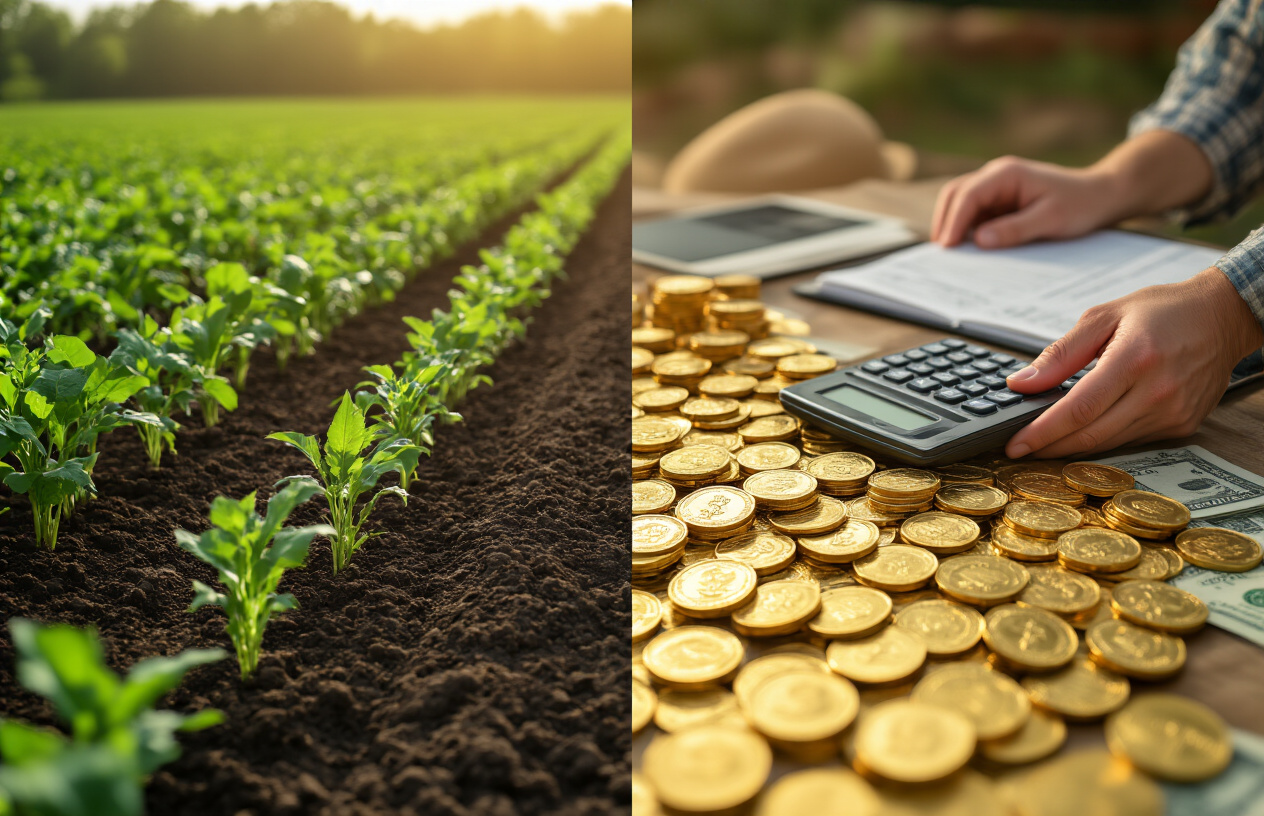
A. Diversification: Why Multiple Crops Ensure Stability
Ever notice how farmers rarely plant just one crop? There’s a good reason for that.
Smart farmers spread their risk by planting different crops that harvest at different times. If disease hits the corn, the soybeans might still thrive. If drought damages the wheat, the root vegetables could save the season.
Your money works the same way. Putting all your cash in one investment is like betting your entire farm on a single crop. One bad storm, and you’re done.
Here’s what real diversification looks like:
| Investment Type | Risk Level | Growth Potential | Harvest Time |
|---|---|---|---|
| Stocks | Higher | Higher | Unpredictable |
| Bonds | Medium | Medium | Scheduled |
| Real Estate | Variable | Steady | Long-term |
| Cash/Savings | Low | Low | Immediate |
Mix it up. Some safe, some risky. Some that pay out monthly, others that grow for years. When market storms hit one area, the others keep your financial farm producing.
B. Patience and Timing: Investing for Long-term Growth
No farmer plants seeds and digs them up the next day to check progress. Yet that’s exactly what we do with our investments when we obsessively check our accounts.
Growth takes time. Period.
The most successful farmers understand seasonal cycles. They know when to plant, when to fertilize, and when to harvest. They don’t panic over a week without rain or a temporary drop in crop prices.
Financial markets have seasons too. Bear markets eventually become bull markets. Recessions give way to expansions.
The patient investor who keeps “watering and weeding” their portfolio during down markets often reaps the biggest harvest when conditions improve.
C. Resource Management: Maximizing What You Have
The best farmers squeeze value from every resource they have. They collect rainwater. They compost. They rotate crops to keep soil healthy.
Your financial life needs the same attention.
Are you maximizing employer matches on retirement accounts? That’s free fertilizer for your money.
Are you letting cash sit idle in checking accounts earning nothing? That’s like leaving fields unplanted.
Are you paying high-interest debt while simultaneously trying to grow investments? That’s like watering your garden while your house is on fire.
Start with what you have. Even small plots can yield impressive harvests with proper care and attention. The farmer with one well-tended acre often produces more than the one with ten neglected acres.
Creating Your Personal Planting Practice
A. Identifying Your Prosperity Seeds
Ever noticed how some people just seem to attract abundance? They’re not magical unicorns. They’ve just identified their prosperity seeds.
Your prosperity seeds are the talents, ideas, and resources you already have that can grow into something bigger. Think of them as your spiritual startup capital.
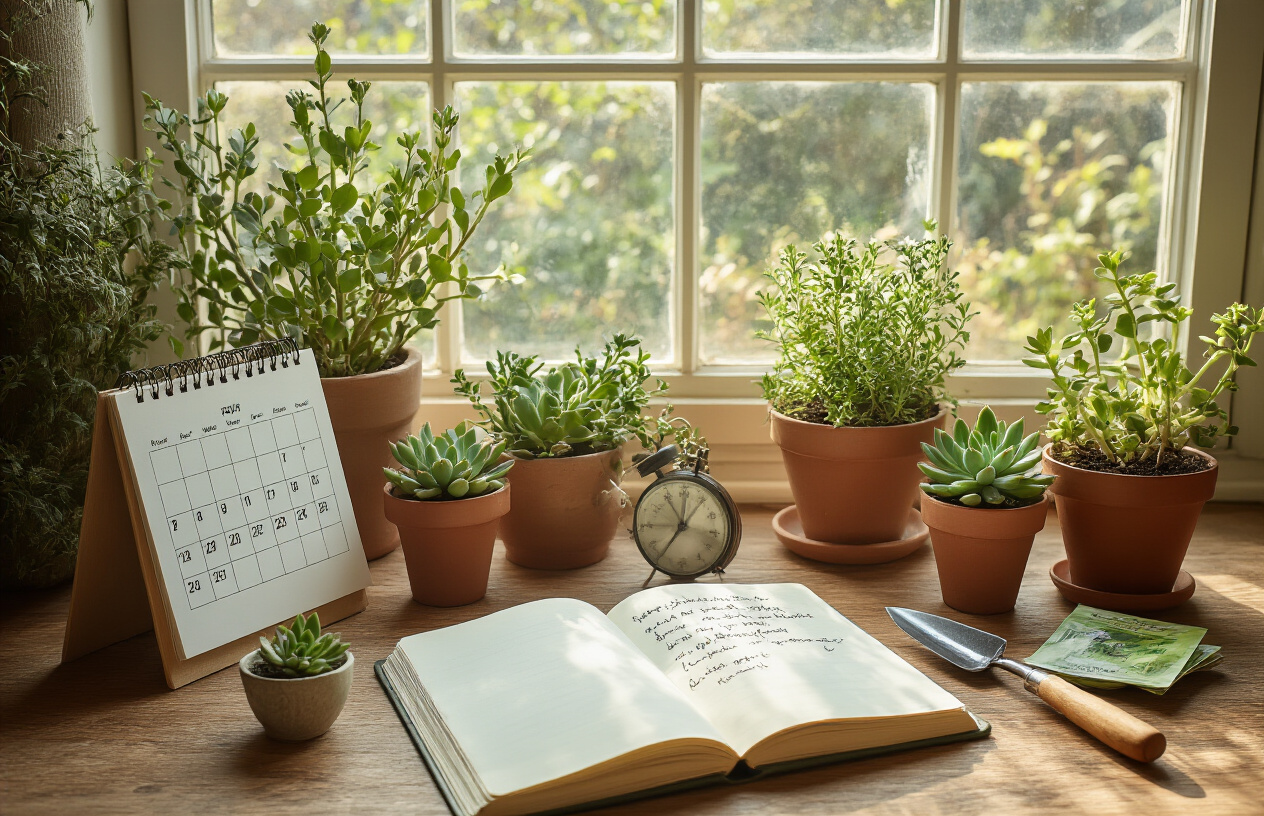
Grab a journal and ask yourself:
- What comes naturally to me that others find valuable?
- Which activities make me lose track of time?
- What resources (knowledge, connections, skills) do I already have?
Don’t overthink this. Sometimes the most obvious seeds are the ones we take for granted. Maybe you’re an amazing listener, can explain complex ideas simply, or make people feel instantly comfortable.
B. Designing Your Growth Environment
Your seeds need the right soil to flourish. Period.
Create a physical space that nurtures your practice. It might be a small altar, a dedicated desk, or even just a special candle you light before beginning your work.
Your mental environment matters just as much. Who are you spending time with? What are you feeding your mind? Ruthlessly eliminate toxicity and surround yourself with growth-minded folks who water your seeds, not trample them.
C. Establishing Nurturing Routines
Consistency beats intensity every single time.
Build simple daily practices that honor your prosperity intention:
- Morning visualization of your abundance manifesting
- Gratitude moments for what’s already growing
- Evening reflection on the day’s growth
- Weekly review of progress and adjustments
The key is making these practices non-negotiable. Just like you wouldn’t skip watering a plant for days, don’t neglect nurturing your prosperity seeds.
D. Tracking Your Abundance Cycle
You can’t improve what you don’t measure.
Create a simple tracking system that works for you. Some people love bullet journals, others prefer apps, and some use voice memos. The format doesn’t matter as long as you’re noting:
| What to Track | Why It Matters |
|---|---|
| Small wins | Builds momentum |
| Challenges | Reveals patterns |
| Unexpected gifts | Confirms abundance flow |
| Energy levels | Shows alignment |
Track without judgment. This isn’t about scoring yourself—it’s about gathering wisdom.
E. Celebrating the Harvest
Most people rush to the next goal without savoring their victories. Big mistake.
Celebration isn’t frivolous—it’s a crucial part of the prosperity cycle. When you acknowledge growth, you literally signal to the universe that you’re ready for more.
Create meaningful celebration rituals:
- Share your success with a supportive friend
- Give thanks in a way that feels sacred to you
- Document your journey visually
- Rest and replenish before the next planting cycle
Remember: the most abundant gardens don’t just grow—they continually reseed themselves through proper harvesting.
Community Gardens of Prosperity
Building Collective Abundance Through Shared Resources
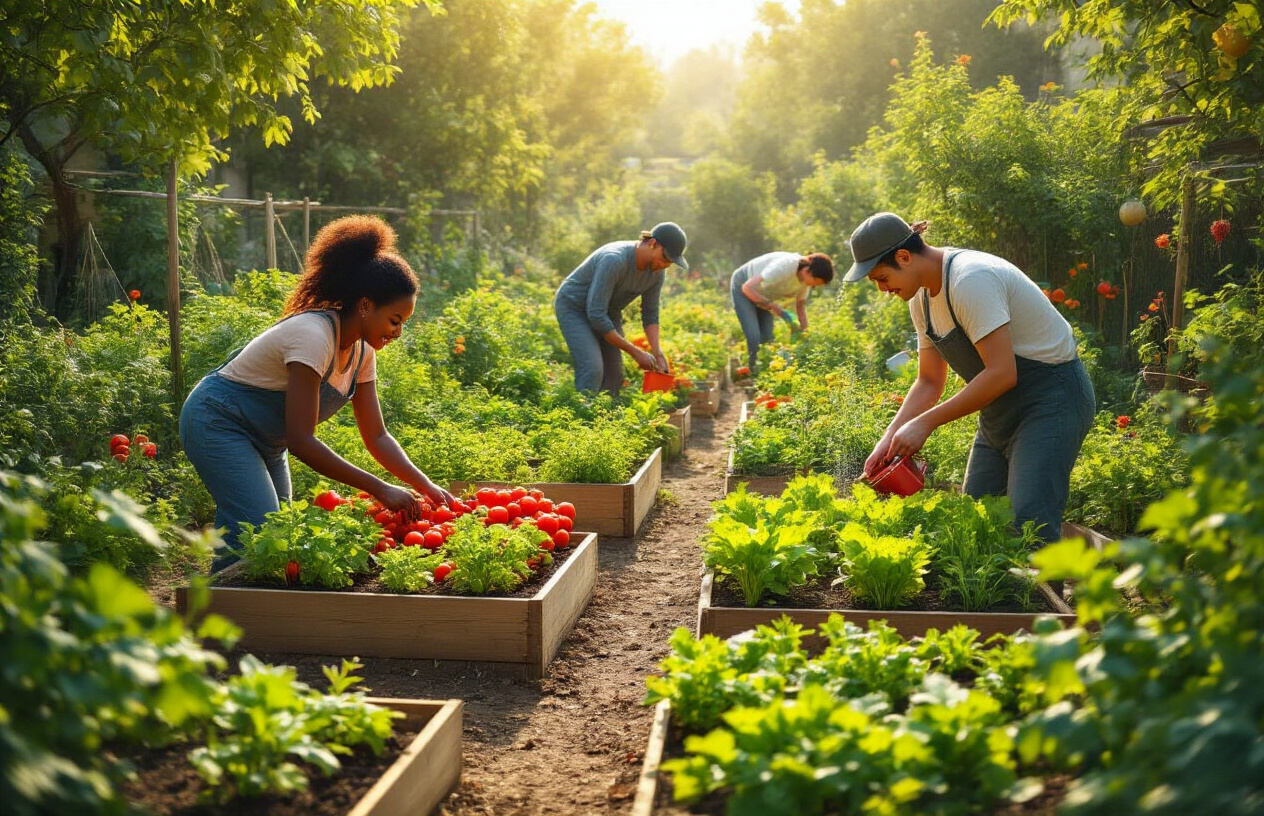
Ever notice how one person with a shovel can dig a hole, but ten people with shovels can create a garden that feeds a neighborhood? That’s the magic of community gardens.
Community gardens aren’t just about growing tomatoes and zucchini. They’re living laboratories where resources multiply when shared. Think about it – instead of everyone buying their own rototiller that sits unused 99% of the time, one shared tool serves dozens of families.
The prosperity math is simple but powerful:
- Seeds exchanged = varieties multiplied
- Knowledge shared = mistakes avoided
- Harvests combined = food security for all
I’ve seen vacant lots transform into vibrant hubs where apartment dwellers without a square inch of soil to their name become productive farmers. The grandmother teaching children how to recognize when a melon is perfectly ripe. The accountant who discovers peace while pulling weeds after work.
Teaching Others to Plant Their Success
Teaching someone to grow food is like handing them a renewable ATM card.
The most successful community gardens have intentional mentorship programs. Not the stuffy, formal kind – just experienced gardeners paired with newcomers, creating relationships that often extend beyond the garden fence.
What happens when people learn to grow? Their confidence blooms alongside their plants. The shy neighbor who barely made eye contact now eagerly explains his composting technique. The single mom who stretches her grocery budget by harvesting fresh produce twice weekly.
Creating Sustainable Support Systems
The strongest gardens create systems that outlast any single participant.
Smart community gardens establish:
- Rotating leadership roles (preventing burnout)
- Seasonal celebrations (strengthening social bonds)
- Written and oral knowledge transfer (preserving wisdom)
- Income-generating opportunities (selling excess at farmers markets)
Gardens that last aren’t just about this season’s harvest – they’re designing for generations. They’re creating living inheritance, passing down both tangible resources and the intangible wealth of belonging to something larger than ourselves.

The Divine Cycle of planting and prosperity offers profound wisdom for both spiritual and financial growth. By understanding the deep connection between sowing seeds and creating abundance, we can apply farming principles to our finances—investing wisely, practicing patience during growth periods, and recognizing when to harvest the fruits of our labor. Personal planting practices, whether literal gardening or metaphorical seed-planting through investments and relationships, create sustainable cycles of prosperity in our lives.
As you implement these principles, remember that true abundance flourishes in community. Just as community gardens nourish many families, sharing our resources, knowledge, and abundance with others multiplies prosperity for everyone involved. Begin today by identifying one seed you can plant—whether a financial investment, a relationship, or an actual garden—and nurture it with intention, knowing that the divine cycle ensures what is properly planted will, in time, yield a bountiful harvest.
